Friday, February 15, 2013

Meteorite Hit Indiana!

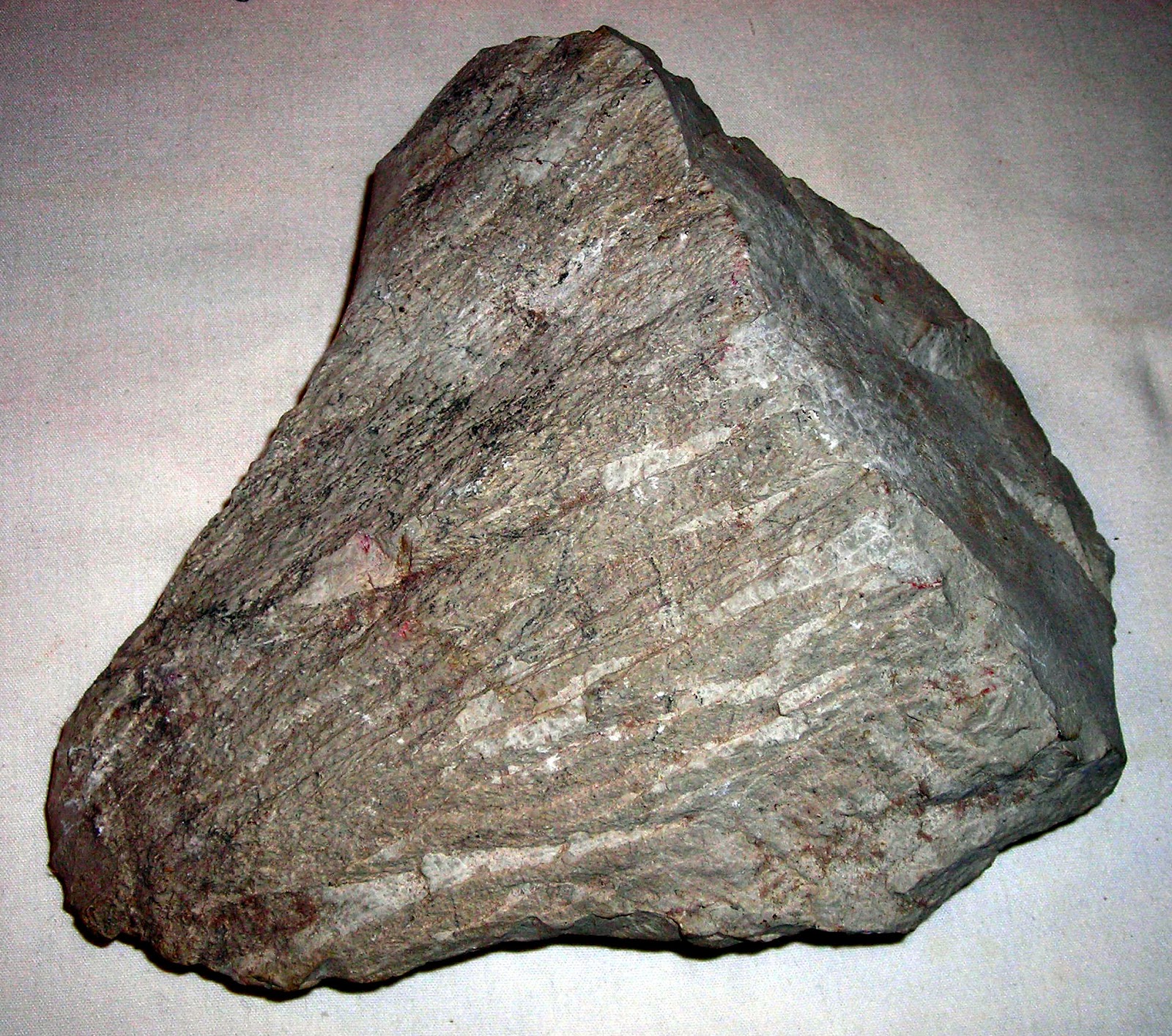
I posted this image earlier today on twitter as a tease, asking if anyone knew what it is. It is proof that a meteorite struck Indiana! Before my passion for the planet turned green, I studied exploration geophysics. A science-y background is serving me well as a BathroomFarmer because I have a science-y vocabulary and can read serious science-y publications without dying of boredom and I can fail forward on the BathroomFarm in a systematic science-y way so no one in the future has to make the same mistakes when growing an indoor garden of his own!

If you have ever been to Newton or Benton Counties in Indiana, you know it has some of the best farmland in the world. It's nice and flat with a thick topsoil of glacial till washed all the way down to Central Indiana from the glaciers that carved the Great Lakes. There's nothing but farm for miles around and that also makes it an ideal place for a giant wind farm spanning several counties, too. Well, except around Kentland, IN,  where it gets a little weird.

Here's the weird. This is called the Kentland Structure. Around 97 million years ago, a really big meteorite impacted this spot. It is one of the biggest impact features in the world and the 4th largest known such structure in the United States. I won't bore you with all of the ho-hum science, but this area is a quarry today. The "money rock" at this operation is called St. Peter sandstone. It's a white sandstone that is almost pure quartz and is used in glass manufacturing.

This is a hand sample of what St. Peter sandstone normally looks like and what the grains look like under magnification. It is glistening and gorgeous in large outcrops. There's plenty of this rock at Kentland, but there's also something amiss about some of the sandstone, too. My rock sample at the top of this post is called a shatter cone and is pretty well recognized today as a result of meteorite impact. I visited this quarry in 1979 with a class. We toted tripods and theodolites all over that quarry and measured locations and angles of the St. Peter sandstone that was altered by catastophe and now looked like dull, gray cones. Some of these cones were more than 3 feet long. We were trying to replicate the study behind a hugely controversial theory from one of the most famous geophysicists ever. In the old days, when we carved our class notes into the same tablets of stone we studied, people thought Robert Sinclair Dietz was a little, well, "out there".

CLICK HERE TO READ A PDF BIOGRAPHY OF ROBERT SINCLAIR DIETZ

I still think it's pretty cool that his original scientific theory was formulated and, now agreed, proven, right here in the Great State of Indiana. What makes the Kentland Structure the location for the study is the almost complete flatness of the area, which has always been flat throughout the history of the planet. There is, therefore, no necessity to reconstruct the position of the rocks at the exact time of impact. When we say that nothing changes in Indiana, we truly do mean EVER. Once we measured angles of the cones, it was possible to calculate per Dietz's idea, where the points of the cones intersected above the ground. That's the actual point of the impact. Almost no very large meteorites ever hit the ground. Friction from our atmosphere cause the explosion to occur well above the ground, which is the case here.

It still packed a giant PUNCH, though. It blew a dome 12.5 kilometers in diameter and created faults in the process. It exposed some really valuable rock that was deeply buried. It pulvarized the quartz particles in some of the St. Peter sandstone into rock flour. Some of this rock flour was instantaneously rehardened by intense, fast heat and pressure into cones making a record of the event. In case you ever need something smart to say at a cocktail party, the shock metamorphism that made the shatter cones is technically called cryptoexplosion deformation. How big was the blast that made the Kentland Structure? It would be the equivalent of the force of an earthquake measuring XII+ in the Mercalli Scale, but concentrated in a tiny area.

Persons settling "these parts" in Benton County, IN had no idea what was hidden beneath their crops. As erosion thinned the topsoil, revealing rock with economic use and quarrying began, people observed the big clues to a catastrophic past. Studies conducted in this site have contributed to a better understanding meteorite impacts that are studied all over the world. No doubt, geophysicists will be heading to Russia with their tripods and theodolites to look for the new clues. What makes the Valentine's Day Impact very exciting to study is that there are videos and eyewitness accounts to add to the information in the rocks! Who'd a thunk all this ruckus started back home on Indiana farmland?


Friday, February 8, 2013

Free Lunch for the BathroomFarm

I have to be a little bit careful about letting people into the inner sanctum of my sustainist lifestyle where doing more with less is a way of life. One day I happened to open my freezer in the presence of a longtime friend who happened to notice an unusual container in there. Not being shy, he had to inquire why I keep garbage in there. Uh-oh.

It wasn't ANY OLD GARBAGE. No-sir-ee. It was the beginnings of a new carefully curated experiment of supplementing specific nutrients in the BathroomFarm. I don't have a worm bin of my own, so I order worm poo (castings) from an Etsy seller which is an ideal all-purpose fertilizer to add to my potting mix. But, it has also come to my attention that plants have specific nutritional requirements for better growth and designer plant food can be pricey. Remember, my goal is to keep the cost of growing an indoor garden as close to being free as possible.

Lucky for me I have a discarded old blender and lucky for me I drink lots of coffee and eat lots of eggs. I'm also really good at prowling the Internet for free samples, so I have a regular supply of organic coffee in small quantities. Any coffee is OK to use, but organic is better if you can get it. Drink the coffee and save the grounds. Likewise, eat the eggs and save the shells. I keep that mess frozen until I have a one-quart container full. Then I put it in the blender and make a frappe which is quite luscious to tomatoes and many other plants.
Mixing this goo into my regular potting mix of dollar store dirt (because its cheap and easy to get within walking distance of most urban Americans) and peat moss, perlite and a bit of worm poo makes a growing medium that's ideal for plant growth. It's very important to have extremely nutrient-rich soil for container gardens because plants deplete the nutrients quickly. It's also important to keep the medium fluffy and help it retain water better and perlite and peat moss help with that. The worm poo works wonders in providing basic nutrients as well as trace minerals. The reason for adding the coffee and eggshell frappe is to supplement calcium which is essential for tomato growth as well as increasing the acidity of the soil thanks to the coffee. You can add this goo to the soil of any calcium-loving plant that grows best in acidic soil. You can also add it to plants already potted to improve the soil.
When transplanting the seedling, I buried its intentionally leggy stem deeply in the pot and and covered it up with the potting mixture, leaving a few leaves protruding from the dirt. In general, tomatoes like being transplanted and their stems can be buried to sprout a better root system.
It seems happy and healthy immediately after transplanting. And, though taking awhile to sprout roots along the buried stem, it has started growing like crazy! I've had less than perfect results with tomatoes, but I am more optimistic than ever after putting more thought into the composition of the soil.

I made a tripod trellis from sticks found in my naturalized yard to wind this vine around to keep it compact and less unruly. Go little tomato plant, go! I'm glad you liked your free lunch from common kitchen scraps!

Sunday, February 3, 2013

Do You Know Your Seeds, Really?

EIEIO! It's Super Sow Sunday, the day that officially kicks off the North American gardening season and when we begin starting seeds indoors in anticipation of warmer days ahead. My BathroomFarm is not a seasonal garden. It grows all year 'round, but I look forward to the participating in the community of gardening at this time of the year. I, like everyone else, have a desk full of seed catalogs. But, really, these days, we need to stop and think about how well we know our seeds.

Look at this! This is an aging chart showing how most of the seed companies in the world are owned by chemical engineering companies. Nothing about that sounds too tasty for the table. More and more small companies are being acquired every year, so it's a good idea to check the history and ownership of the sources of your seeds. It's true that most of these companies, are supplying seeds for factory farms. It's also true that many people are growing their own food because this is exactly what they don't want.

Really, are you completely breaking free from this corporate system, and all of the creepy frankenfood associated with it, by gardening? You think that by buying heirloom or organic seeds that you are no longer supporting the downward spiral in biodiversity.
I was shocked to learn, that in its quest to monopolize the American food production industry, that Monsanto has begun buying the names of varieties of heirloom vegetables. When you buy seeds from plants with names owned by Monsanto, Monsanto is getting paid. Money fuels their fire for world domination. There is some good news. None of these plants have been genetically modified. All that is owned is the intellectual property of the name of the plant.

CLICK HERE FOR A LIST OF HEIRLOOM SEED NAMES NOW OWNED BY MONSANTO.

The plot further thickens for farmers who grow plants from seeds whose names are owned or whose genetic patents are owned by chemical engineering companies. H. R. 193 is now pending in the United States House of Representatives. If passed, this law would require farmers, who grow seeds with intellectual property owned by another party, to register saved seeds and pay fees on them.

CLICK HERE TO LEARN MORE ABOUT H. R. 193

There is good news, though. There are plenty of ethical organic and heirloom seed companies who want your business and are willing to take a pledge to assure their customers of the integrity of their products. To make the simple act of buying seed with conscience simple again, be sure to ask your supplier if they have signed "The Safe Seed Pledge". If they have not, but want to make this commitment to quality of their products and to biodiversity, please share the link below with them. I believe that this is going to be an important factor in consumer choice in the very near future.

PDF OF THE SAFE SEED PLEDGE

Once you navigate all of this madness surrounding the once-simple seed and mindfully purchase your seeds, you have some planting to do! Freshly planted seeds and tiny seedlings do need some tender loving care. I make upcycled "watering cans" from empty milk cartons. It's simple to do. Just punch holes in the cap to gently spritz water on your tiny plants.


Saturday, January 26, 2013

Don't Just Hug That Tree, Say Happy New Year Instead!

For thousands of years, people have written stories that mention trees and we still read these stories today. My owl is snoozing in the old sycamore tree in my yard, and honestly, I never gave much thought to just what a very big deal it was for someone to scale one of these trees to listen to a teacher until I lived with this species of tree and learned that it sheds its bark, leaving a very slippery, smooth hard-to-climb surface. No wonder the owl feels quite safe there.

Owning a fruit tree was a form of wealth in Biblical Old Testament times and, in an age where the religion and government were one body, it's safe to say that there was a tax or tithe to pay:

When you come to the land and you plant any tree, you shall treat its fruit as forbidden; for three years it will be forbidden and not eaten. In the fourth year, all of its fruit shall be sanctified to praise the L-rd. In the fifth year, you may eat the fruit.
                                                                                          -Leviticus 19:23-25

Just like there are many modern years, such as calendar years, school years and fiscal years, it was necessary to create a standard for determining years for a tree for tax/tithe purposes. Tu B'Shevat, today, is the is the day when all trees age one year from Tu B'Shevat last year, regardless of the calendar date when they were physically planted in between. This day remains on the Jewish calendar because it's a tradition although not all that many Jews grow fruit trees in the 21st century. However, green-thinking Jews have evolved the holiday through time, making it a Jewish Earth Day!

During the 17th century, the Kabbalists were inspired by Deuteronomy 20:19, "For man is like the tree of the field." A ritual for Tu B'Shevat was created that included a special order service called a seder. The idea was to repeat this ritual annually to contemplate the relationship between humanity and trees. In order to be consistent, there is a written text, called a haggadah, that was followed during the service.

CLICK HERE FOR ONE VERSION OF THE MODERN TU B'SHEVAT HAGGADAH TEXT.

Tu B'Shevat seders always include the idea of planting. Sometimes, parsley seeds are planted as part of the ritual because there is exactly enough time to grow a windowsill pot of parsley to be harvested for use in the ritual of the Passover seder. Others participate in planting trees in Israel to remember the victims of the Holocaust.

Today, and I do mean right now, Jewish green organizations are making commitments to reduce inefficient energy use and wasteful food consumption as reported in news today. What began as a necessary part of the taxation process has completely evolved into the Jewish Earth Day celebration. Yes, and with celebration, there is song and art! In closing, I'll share a fun Tu B'Shevat song for children! It's truly a great day to sing and dance among trees!


Thursday, October 4, 2012

Preparing for Winter

Winter on my BathroomFarm is much different than winter on the outside farm. In fact, it is my optimum growing season. My bathroom has south facing windows so I get a little boost from the sun. The wall my garden "grows up" has a dead air space behind it and a source of heat in front of it and my garden lamp shining on it. The cooler window ledge on the other side of the room is ideal for growing collards, a cool weather crop, in pots on the window ledge.

I started some new seeds for my winter crops and they are hanging in the milk carton "greenhouses" on the wall. Empty milk containers are such a great supply for my garden and I love the built-in handle hangers. My fingers are crossed that the green globe peppers, spoon tomatoes, Minnesota mini melons and the Easter eggplants all get off to a good start.

The seedling on the left is a cherry tomato plant discovered growing rogue on an Etsy seller's farm. I chose it for it's aggressive nature. So far, the seedling looks awesome. If the tomato vines currently growing, but not blooming don't improve by the time this one is ready to transplant, they are going to be pulled up to make room for something that's going to be hopefully better. Space in my garden is too precious to curate plants that aren't productive!

Also from the same Etsian's farm, I'm hopeful about growing very small "spoon" tomatoes. They were hand cross pollinated from two different tiny tomatoes growing in a container and the fruits are the size of a currant. I like that they were grown in a container so hopefully they will work for me, too. I got the Easter eggplants which grow white egg-size, soft-skinned eggplants from a different Etsy seller. I "heart" Etsy for garden supplies!


I moved my cucumber vine from a flower pot into the larger suspended trough container on the wall. There's twine on the wall for a trellis so it will have plenty of room to meander! This vine blooms like crazy but only recently has started producing female flowers. Like the peppers, cucumbers also require paintbrush pollinating because there aren't insects indoors to do the job for me! Because there was some room in this hanging planter, I direct sowed some parsley and cilantro seeds. I'm planning on making a lot of falafel this winter so fresh herbs would be great on hand!


My chili pepper plant which has been producing continuously since last Christmas has once again outgrown its container. This jumbo pot has been sitting outside of the carriage house growing nothing but weeds for a few years. With a huge pot full of extra nutritious homemade mix and regular spritz of magnesium-rich Epsom salt water, I can't wait to see how well this healthy little plant grows!

My BathroomFarm is reorganized and is going to be left to grow into it's next phase of development while I work hard on my Halloween projects. Halloween is like Black Friday for Baisebeige Studios, my textile business. And, shortly after that, there's the real Black Friday to consider. In fact, I start Etsy Holiday Boot camp to prepare for that today. Time is flying on the BathroomFarm!


\

Sunday, July 22, 2012

My First Year on the BathroomFarm

It's been a year and a week since I planted the wall on my BathroomFarm and it has been a wonderful year indeed. My landlord bolted a flooring scrap for a better nailable surface on the wall of my bathroom during post fire renovations. I filled various beverage containers with dollar store dirt and barely thriving seedlings, hung them up and turned on my homemade BathroomFarm lamp.

This first year has been quite a learning experience which is fine because I am the Queen of Failing Forward and willing to learn from every mistake and try anything a couple of times. I have gone from an inexperienced gardener with not one clue to actually eating food from my garden. I've read zillions of books and blog posts and Googled every stupid gardening question ever asked. And, I keep doing it because I believe that it is 100% possible to empower yourself by gardening even if you you have no yard, no experience, no traditional gardening tools and no money.

The BathroomFarm is designed to be a very low cost, almost no cost venture. Many urban people are finding themselves without a source of fresh food these days and many people are also finding themselves in financial situations they have never expected. That's why I designed my garden with simple and inexpensive materials and use grocery store and dollar store seeds. Food producing plants and seeds can be purchased with food stamps if the retailer accepts them as a form of payment. It was an exciting moment to become a partner with snapgardens.org and help spread the word that food stamps grow gardens.

It's true that gardens require more than seeds, so I raised the money to buy things my garden needed (like the materials for my garden light and some products like peat moss and Perlite to make my dirt better) by having a yard sale and earning Amazon.com gift certificates answering surveys online to demonstrate that resources can manifest to support the needs of a garden without stressing a budget. By Christmas, the fruits of my labors were starting show!

I was inspired to learn more and work harder to get more of these positive results. I am studying the needs of each plant and making the conditions as optimum as possible because the goal is to have a variety of fresh food all year long in a compact space. The really interesting thing about container gardening indoors is that plants with proper care can live a very, very long time without needing to be replaced. The only reason many die after one season outside is because of the change in the weather.

Thousands and thousands of people follow @BathroomFarmer on twitter. As soon as they stop laughing, they click "follow" because there are so many good reasons to grow your own food. The price of food is always going up and the questionable quality of food these days has people very concerned. I have a solution for many people who thought a traditional garden was just not possible. I do not believe in *not possible*! Growing bell peppers indoors is not possible, they say. If you need to be really, really impressed, this little pepper is growing indoors and upside down from a beverage bottle upcycled into a wall pocket!

I pollinated that pepper blossom with a paintbrush on the way out of the door to speak at the first ever Indianapolis Food Independence Day event at Earth House. It's such a good idea to come together as a community and share ideas about growing and eating better food as a community because it does inspire positive cultural shifts in the community. The good word about personal empowerment by gardening was further spread in print and online articles in Indianapolis' NUVO newsweekly! Speaking at the event was good, but attending was even better. There were so many great ideas shared that day, I will keep quite busy on the BathroomFarm until the next Food Independence Day.

So here's my year old BathroomFarm and such a wonderful garden it has become with plenty of room to grow. This is probably one of the best and certainly one of the most unusual ideas I have ever had. I'm really proud of the results so far, but, most of all, I just love to let it be. All  gardens are such wonderful things. I grew this myself. From seed. With faith. Just like the real farmers do.


Sunday, February 5, 2012

Super Sow Sunday

While the majority population was rapt with watching the premier sporting event of the year, I joined a group of gardeners and participated in a twitter chat celebrating the kick off of the 2012 gardening season in the northern hemisphere. This is Super Sow Sunday, a special online event of the popular garden chat forum hosted by BGgarden. It does seem to be a bit early to think about gardening, but it is realistic to start seeds indoors and then transplant them after the threat of frost. Although, BathroomFarming is independent of the cycle of the seasons, this is the time of the year to buy seeds in retail stores and a little community spirit doesn't hurt either!

Last year, I started seeds in toilet paper cores well in advance of moving back into my renovated room. This year, I decided to try something different and make seed starting
containers from upcycled milk jugs to put on the wall of my BathroomFarm. I was inspired by Susan Klatz Beal's article:

I, however, wanted to make changes in the design to be able to hang them on my wall.

Many other people were getting their hands dirty with gardening activities while chatting so working on my garden seemed really natural. First, I cut the side open on the jug, leaving the handle intact. I also punched some drainage holes in the bottom as well as a few holes around the opening to loop paperclips through to be a closure. The original design is to cut the top all the way off. But this compromise gives me an easy way to hang the little greenhouse as well as an easy way to open it for watering and tending the plants.

Then, I kept true to the original design and lined the interiors of the bottoms with wet newspaper. I like the idea of being able to use the newspaper to easily extricate the seedlings for transplanting. If I am very clever, I can design wall pocket containers that will make transplanting easier by planning ahead for the shape of the bundle to be removed. It won't be difficult to cut the soft milk carton plastic apart with scissors when I'm ready to do that. I can go ahead and plant the newspaper along with the seedlings in the wall pockets and the newspaper will biodegrade gracefully adding carbon to the soil.

Then, I got my hands dirty and filled the newspaper lined milk carton bottoms with wet potting soil mixed equally with perlite and peat moss. Since I fluffed up my dollar store dirt, at the suggestion of Susan Klatz Beal, my garden has been doing much better! I started some cherry tomatoes and spinach first. The nice thing about BathroomFarming being independent of weather and seasons, is that I can add crops gradually. I think this is my best strategy because container gardening is more challenging than I had anticipated. It would be best to master it slowly and have better results in the long run.


The final step was to close the little greenhouses up and hang the handles over nails on my wall. I edited a picture of my project for the evening and posted in the chat. What an interesting and fun thing to do!

I was also surprised by winning a great gift basket from BBB Seed containing wildflower seeds and heirloom vegetable seeds as well as some personal care goodies! How awesome is that?